
What a week!
Big tech stocks got hit hard this week after earnings from Microsoft (MSFT), Alphabet (GOOGL), and Amazon (AMZN).
While chips got wrecked by Intel (INTC).
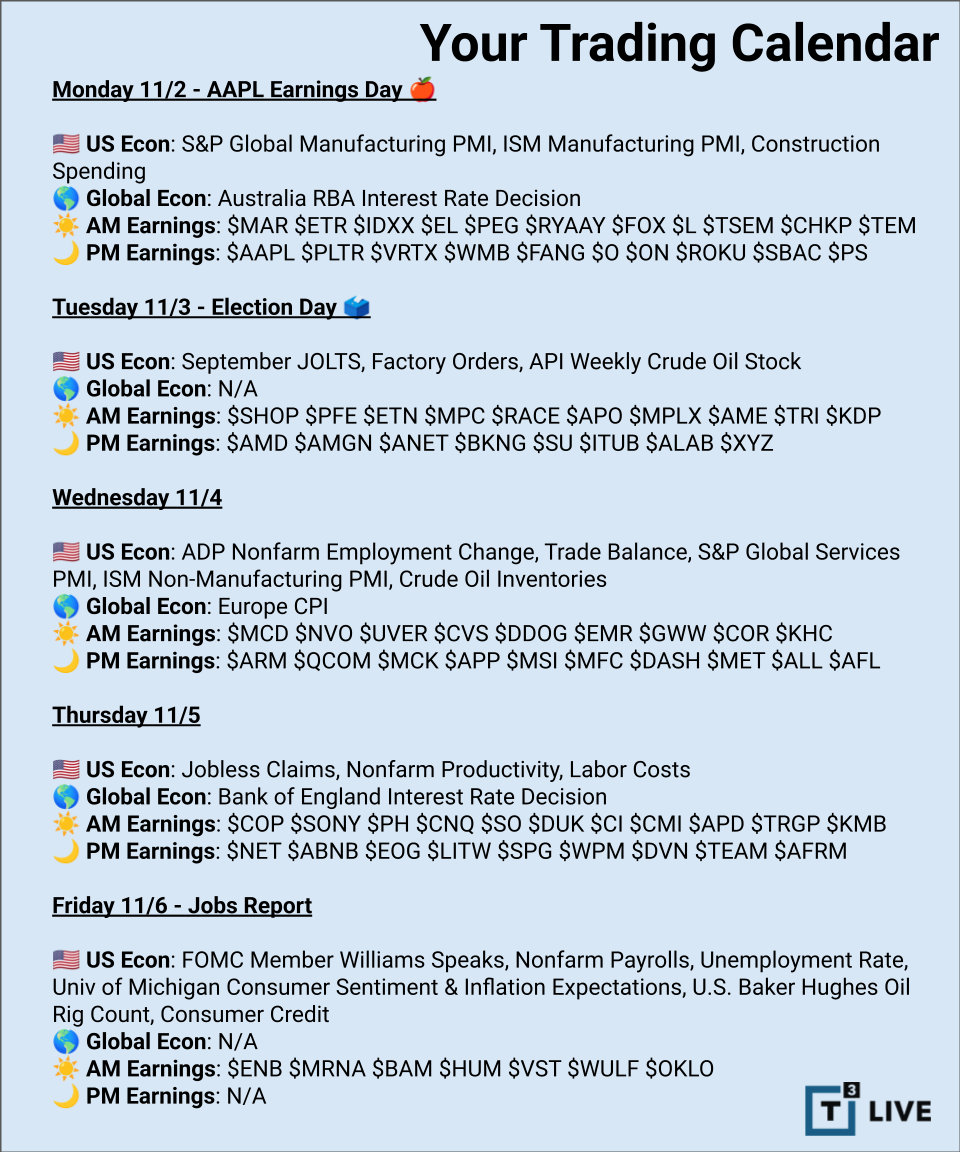
And the fun continues next week with more big earnings.
Let's dig in.
Big Earnings Disappointments
We previously labeled this week the "Super Bowl of Trading".
And it was a doozy.
It was the busiest week of earnings season with giants like SanDisk (SNDK), Alphabet (GOOGL), Microsoft (MSFT), Amazon (AMZN), Visa (V), GE Vernova (GEV), Intel (INTC), and plenty of other key names reporting.
And it was a bit of a bloodbath.
It was the worst day in GOOGL history. The company lost half a trillion dollars in market cap in one day.
Then INTC got crushed on weak guidance. AMZN missed.
And even beats from MSFTand SNDK weren't enough...

Big tech companies aren't getting the same grace anymore for big spending on AI.
The earnings slump dragged down the broader market to end the week, with QQQ briefly breaking below the $686 support level.
Many traders view that as the Bear/Bull line in the sand for this market.
And the earnings craze isn't slowing down.
Next week is another packed calendar with Apple (AAPL), Palantir (PLTR), Advanced Micro Devices (AMD), Arm Holdings (ARM), Qualcomm (QCOM) and more!
Take a look:
MAG7 No More?
It may be time to pick a new group of leaders.
The current "Magnificent 7" – Apple (AAPL), Nvidia (NVDA), Alphabet (GOOGL), Amazon (AMZN), Meta Platforms (META), Microsoft (MSFT), and Tesla (TSLA) – no longer trade as one big group.
An analysis by CNBC calculated the rolling 60-day correlation of daily returns for each of the 21 unique pairs among the group.
The average of those correlations has fallen to the lowest level in more than a decade:
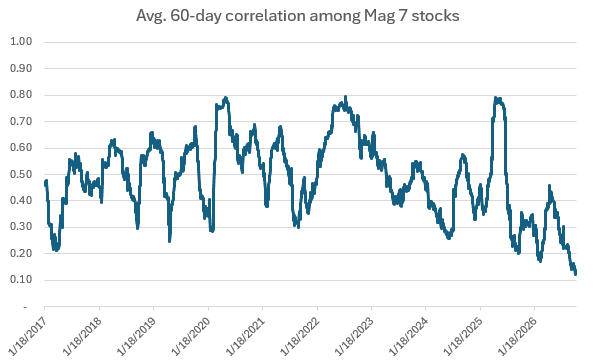
Analysts say that deviation is due to each company's different exposure to AI.
And since AI has been the trade of the year, the Mag 7 has been lagging as a group in 2026.
As of Friday, SPX is up over 10% YTD while MAGS is up just 3.5%:

Election Day Is Upon Us
The start of this Q4 has been marked by fear as traders await Election Day.
But that uncertainty will clear up this week.
The balance of power in Congress is up for grabs in the midterm elections on Tuesday, November 3.
And history shows the market should rally no matter who wins.
An analysis by Schwab found the S&P 500 has averaged a 5.7% return in the three months right after a midterm election since 1974.
11 of the 13 years in that analysis had positive returns.
And in the six months following the midterms, SPX saw a positive return in all 13 years, averaging 12.4%.
Markets don't like uncertainty and getting past Election Day relieves a lot of uncertainty for traders.
Sentiment Still Sucks
The latest AAII Sentiment Survey shows that 37.8% of investors are bullish.
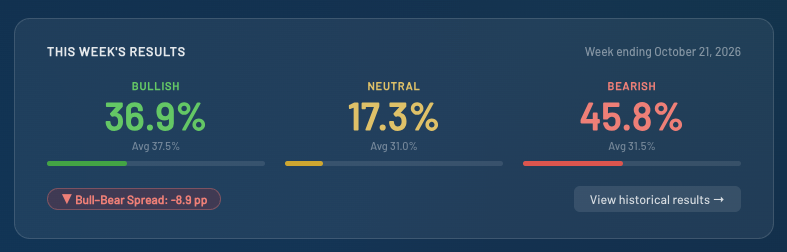
That's in-line with the long-term average of 37.5%.
And it's the fourth straight week of neutral-ish sentiment.
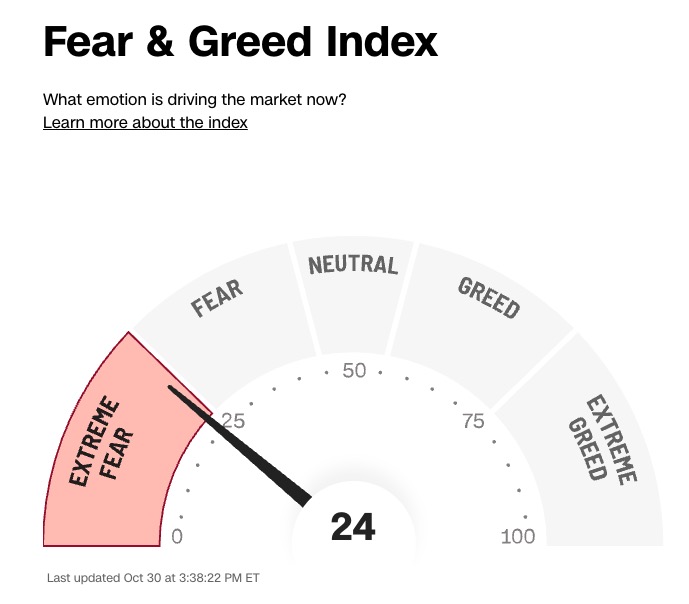
Plus, CNN's Fear & Greed Index is at just 24/100, indicating Extreme Fear.
Will the joy ever return?
Hawkish Fed Reigns
The Federal Reserve kept rates unchanged at this week's meeting, as expected.
But it was a hawkish pause as policy makers raised concerns about inflation.
The 10-2 decision saw two members vote for a 25 basis point hike: Governor Lisa Cook and Cleveland Fed President Beth Hammack.
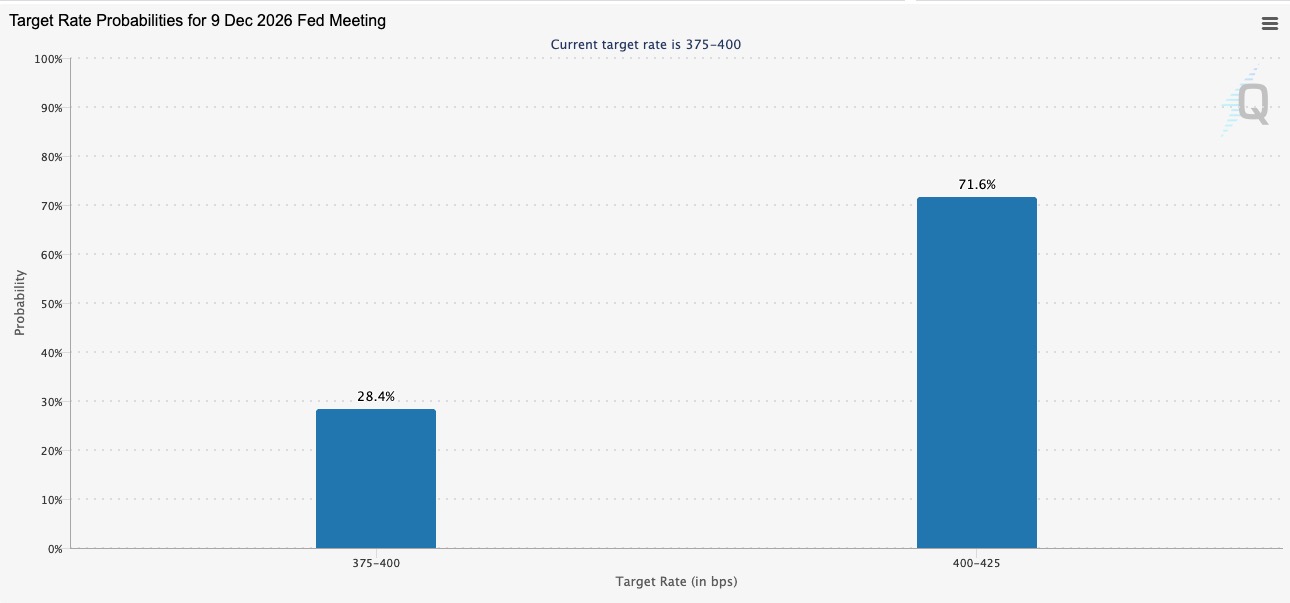
The Central Bank didn't clearly layout plans for their next hike but 71.6% of traders are now betting on a hike at the December meeting.
Fed Chair Kevin Warsh didn't provide much clarity during his press conference, saying growth is strong and inflation is too high.
He said the Fed has shown both that it is ready to act and that it is willing to. But repeated that he doesn’t favor signaling the future path of rates through forward guidance.
Warsh also announced the bank will hold fewer rate-setting meetings starting next year.
In 2027, one of the eight meetings will focus just on strategy with no vote on rates.
In 2028, two of the eight meetings will have no rate decision.
Now focus turns to the October jobs report on Friday.
A strong report will likely lock in chances of a December 9 rate hike while weak data may push the Fed to delay again.
