
How Meta Can Hit $1,000
We're cruising into the July 4 holiday so let's take a look at the 5 things you need to know right now.
How Meta Can Hit $1,000+
On Thursday, Bloomberg reported that Meta (META) is planning a cloud infrastructure business called “Meta Compute” to sell excess compute capacity for AI and other applications.
If this is real, it would put Meta in competition with the likes of Amazon (AMZN), Microsoft (MSFT), and Alphabet (GOOGL).
You could argue this a million different ways.
The bears will say Meta should not have excess compute capacity, and it's entering battle with aggressive competitors.
Or maybe this gives Meta the potential for a higher valuation because it's hitching a more direct ride to the growth of AI.
But I ask myself, couldn't Meta make way more money by just selling ads to AI companies?

This seems like the easy money instead of rolling the dice with hundreds of billions in AI infrastructure investments.
Yes, Meta should use AI for things like improving ad targeting and speeding up code development.
Everybody knows that.
But it seems far smarter to be the cash register counting up all the ad dollars from OpenAI, Anthropic, etc.
Call me crazy.
But if Meta backs off from its wildly aggressive AI spending plans, I think it's going straight to $1,000. Because earnings estimates will go through the roof.
The problem is that this could take years.
I mean, how long did it take before they realized the Metaverse sucked?
Techflation Is Here
In 1965, Intel (INTC) co-founder Gordon Moore observed that the number of transistors in a chip would double about every two years, with the price dropping by half.
That was declared “Moore's Law.”
It's something of an outdated concept for technical reasons. For example, transistors can only get so small.
But what if AI, to some degree, has given us Moore's Law, only upside down?
Prices for SSDs, DRAM, CPUs, and even old-school spinning hard drives are going up.
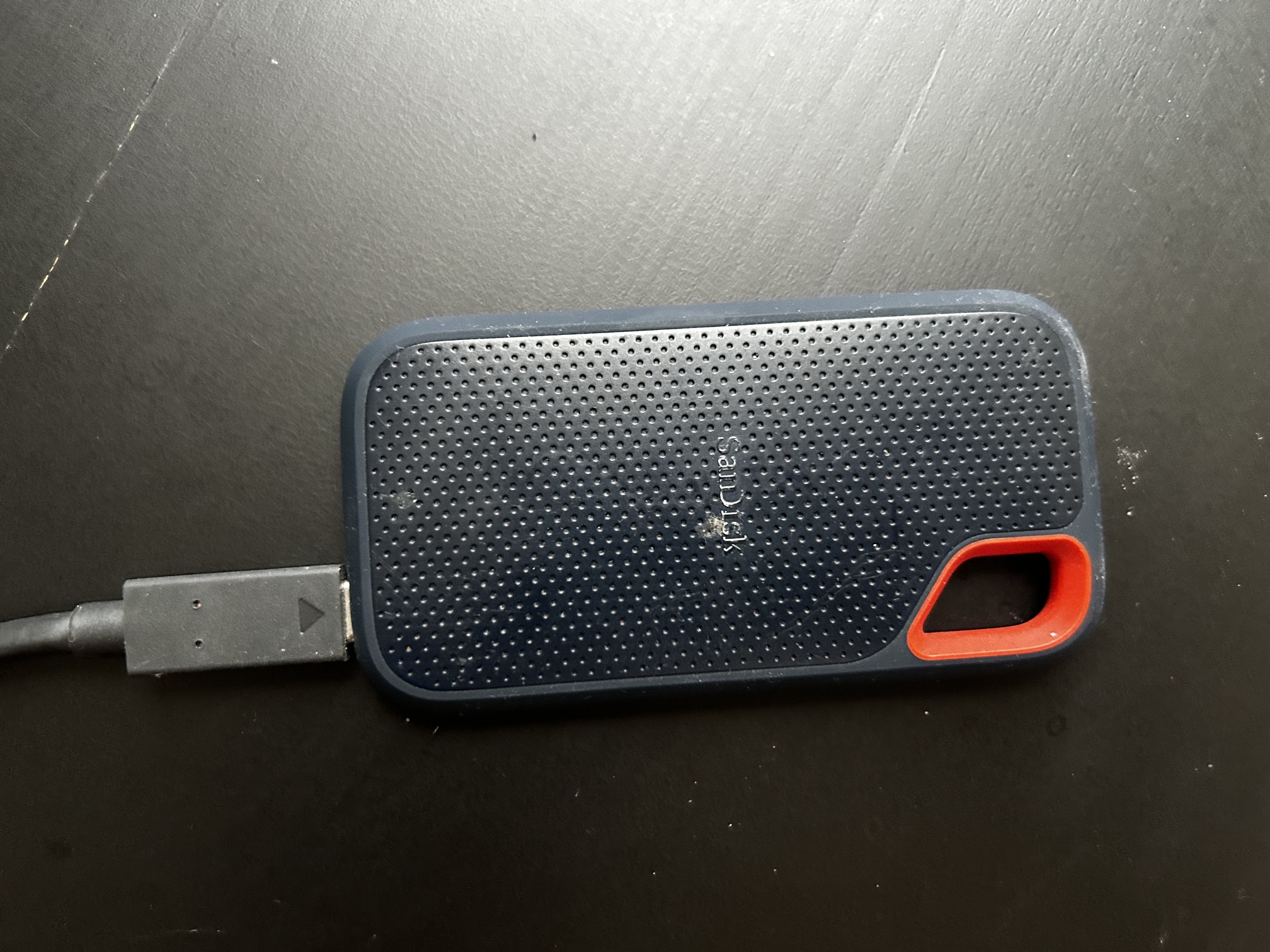
This SanDisk (SNDK) SSD drive cost T3 Live $150 in January 2023:
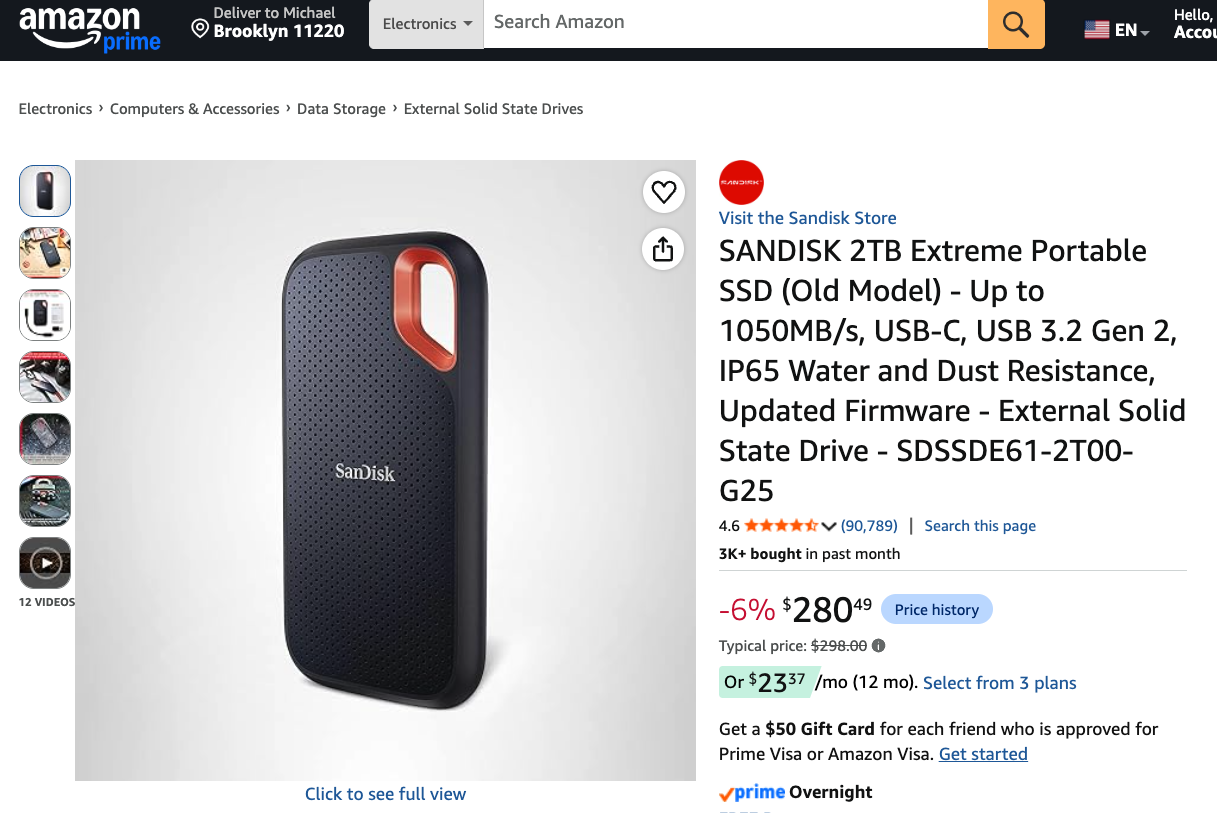
Today, it's going for $280+ on Amazon:
News reports indicate that Intel is raising prices for desktop CPUs.
These are not super-powered AI chips.
But it looks like we have an upward pull on everything related to computers, smartphones, and tablets.
If people are paying higher prices for SSD drives, why not everything else too?
Recently, Microsoft (MSFT) announced higher prices for its Xbox video-game consoles.
It expects storage and memory prices to double by the fall of 2027.
And Apple (AAPL) jacked up prices on Macbooks and iPads.
Welcome to techflation.
Did Warsh and the Jobs Report Shift FOMC Expectations?
The Nonfarm Payrolls report was slightly light today.
And yesterday Fed Chairman Kevin Warsh said inflaation risk are declining.
So have FOMC rate hike expectations shifted lower?
Nope.
The CME's FedWatch tool shows that markets are pricing in a 79% chance of higher rates by year-end.
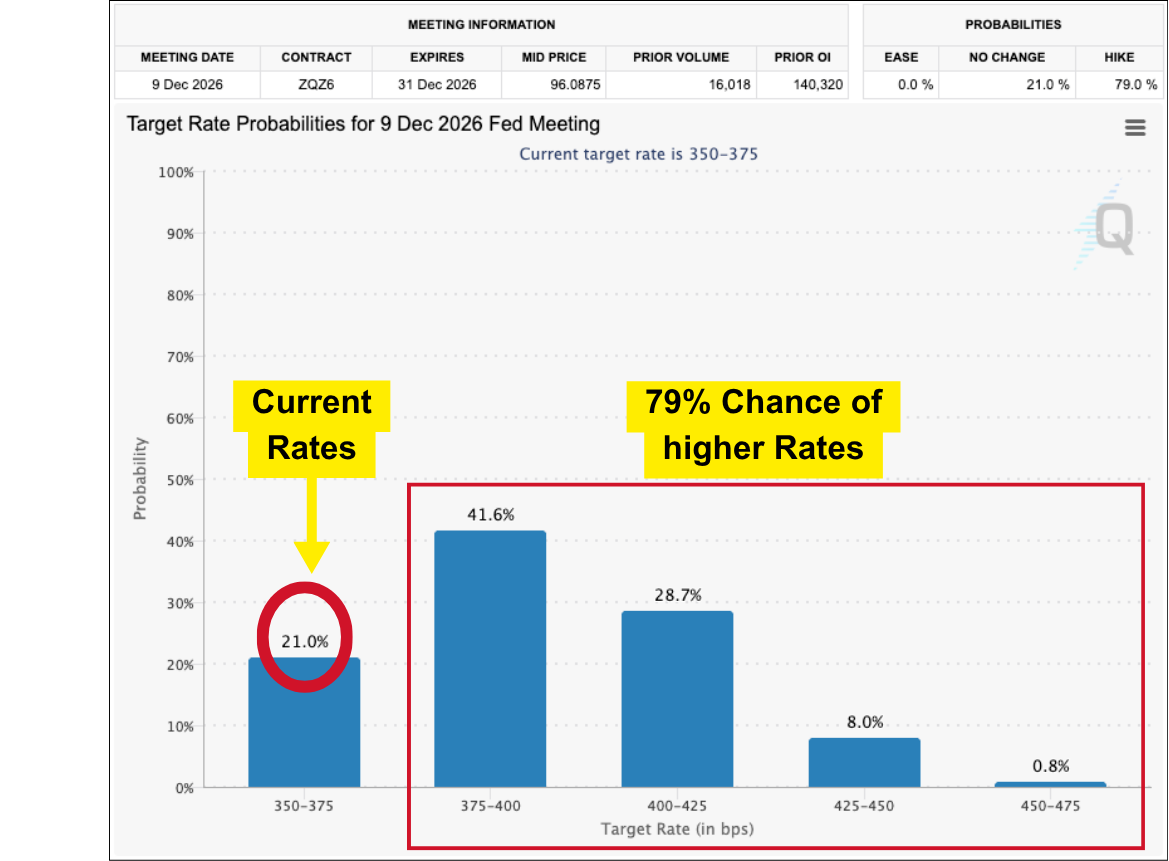
This compares to 83.1% yesterday and 80.8% a week ago.
So nothing's changed on that front.
And the expectation of higher rates is boosting this name:
Robinhood Rockets!
Sami Abusaad has been super bullish on Robinhood (HOOD).
And it's been on a tear:
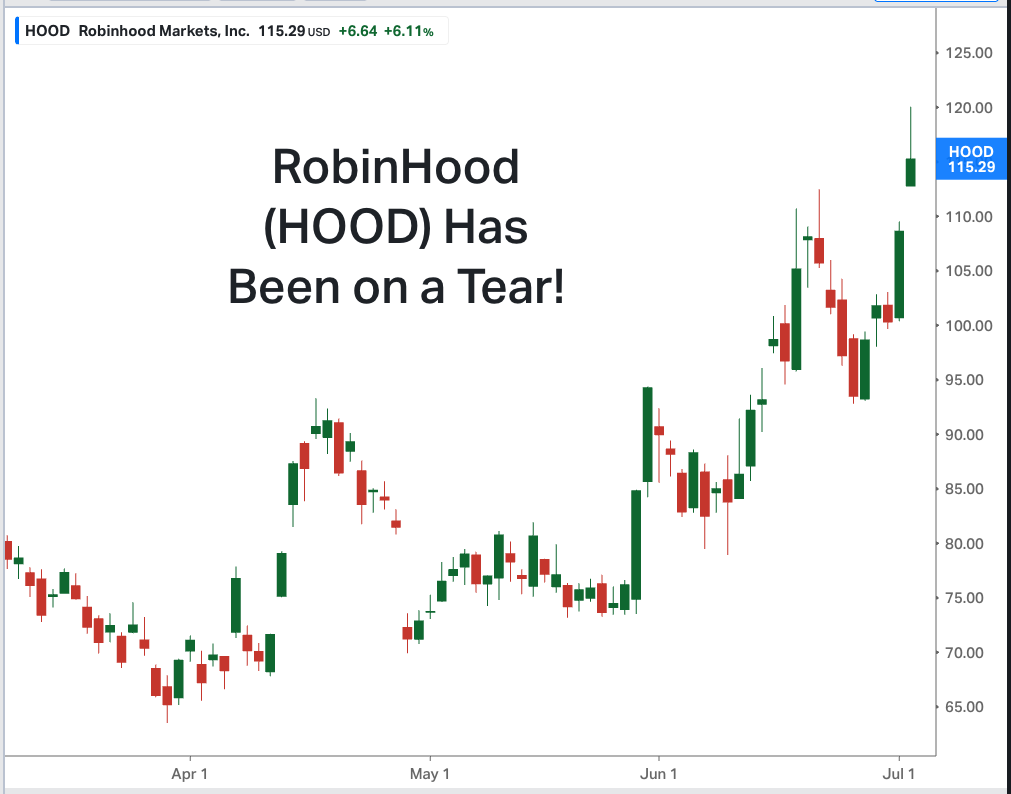
One reason is the expectation of higher interest rates.
Higher rates means bigger profits on margin loans.
And margin loans have been at record levels.
Plus, based on Interactive Brokers' (IBKR) June 2026 numbers, we can assume Robinhood is seeing heavy trading volumes.
And if the crypto market can turn the corner, that would give Robinhood even more rocket fuel.
Crypto revenue has been a sore spot for Robinhood, so if that reverses, it could be off to the races at an even faster pace.
FYI: IBKR is one of my biggest positions.
Wait. Are Investors and Traders Bearish?
The AAII Sentiment Survey shows that investors flipped back to bearish this week.
Just 31.4% of investors are bullish on stocks for the next 6 months, a substantial drop from last week's 44.9%.

This is the sixth bearish reading in the last seven weeks.
It seems like folks are still worried about the economy, the direction of the FOMC, and the sustainability of the AI/semi boom.
Meanwhile, CNN's Fear & Greed Index is at just 31, indicating moderate fear.

Plus, the CBOE's equity put-call ratio is at 0.69, which is in the neighborhood of neutral.
No sentiment indicator can help you nail the market every time.
But rampant euphoria often coincides with market tops.
And we are nowhere near that.

5 Days Free in a $7,000 Trading Room
Trade alongside David Prince live, Oct 26–30